Mini Split Repair in Utah County
Mini Split Repair in Utah County
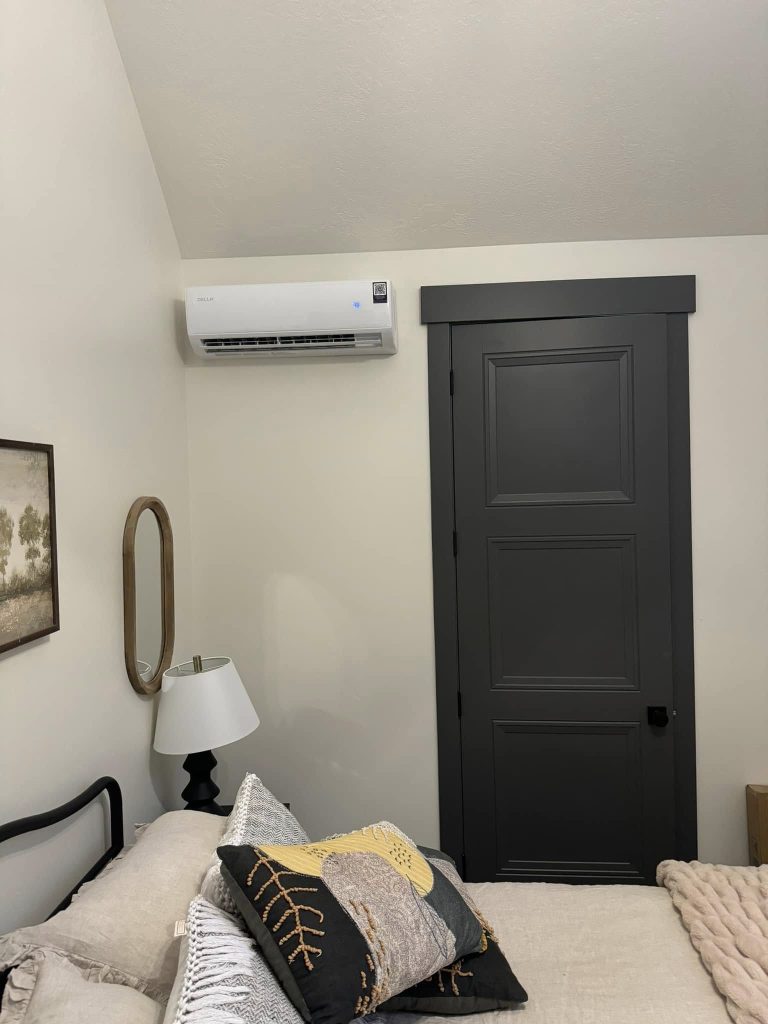
Ductless mini split Utah systems are reliable, but they’re not immune to problems. When one stops cooling or heating, the symptoms can look similar to a central system failure but the causes often aren’t. Refrigerant leaks happen at different points, error codes work differently, and drainage issues specific to ductless mini split Utah indoor heads are their own category. Getting an accurate diagnosis requires someone who works on ductless systems regularly, not just someone who mostly works on central HVAC and is guessing at a ductless mini split Utah.
Peak Air HVAC provides ductless mini split repair throughout Utah County. Our technicians are NATE, EPA, and RMGA-certified with over 10 years of HVAC experience. We diagnose the actual problem, give you a written price, and fix it. With all our repairs backed by a 2-year labor warranty.
Call 801-367-9007 for ductless mini split Utah repair.
Common Mini Split Problems We Repair
System not cooling or heating. The most frequent call we get. Common causes include low refrigerant from a leak, a dirty evaporator coil on the indoor head restricting airflow, a failed capacitor, or a communication error between the indoor and outdoor units. Each of these produces similar symptoms but requires a different fix. A refrigerant charge without finding and repairing the leak is a temporary patch, not a repair.
Refrigerant leaks. Mini split refrigerant connections are made at the flare fittings where the line set connects to the indoor and outdoor units. Leaks at improperly torqued or over-torqued flare connections are one of the most common mini split failure points, especially on systems that weren’t installed carefully. We locate the leak, repair the connection, and recharge the system to the correct operating pressure.
Error codes and control board issues. ductless mini split Utah systems display error codes on the indoor head when they detect a fault. These codes point toward the problem (a specific thermistor failure, a communication error, a refrigerant pressure fault) but reading them correctly requires knowing what each code means for the specific brand and model. We diagnose from the code, not just reset and hope.
Drain line clogs and water leaking from the indoor unit. Mini split indoor heads drain condensate through a line that runs to the outside or to a drain. When that line gets blocked by algae, debris, or a kinked installation, water backs up and leaks out of the indoor unit. We clear the drain line and identify whether the original installation left a drainage problem waiting to happen.
Dirty coils. The indoor evaporator coil and outdoor condenser coil both lose efficiency as they accumulate dust, debris, and biological growth. A dirty indoor coil restricts airflow and can cause the system to freeze up. A dirty outdoor coil forces the compressor to work harder in high ambient temperatures. Coil cleaning is part of annual maintenance, but it’s also a common repair call for systems that haven’t been serviced in several years.
Fan motor and blower wheel failure. The indoor head has a blower wheel that moves air across the evaporator coil. Blower wheel failure, motor bearing wear, and debris buildup in the wheel all cause the same symptom: reduced airflow and a system that runs but can’t keep up. We inspect and replace failed components rather than replacing the entire indoor unit when the rest of the system is in good condition.
Sensor and thermistor failures. Ductless mini split Utah systems use multiple sensors to monitor coil temperature, ambient temperature, and refrigerant pressure. A failed thermistor causes the system to behave erratically: short-cycling, not reaching setpoint, or displaying an error code. We test each sensor and replace only the failed component.
Before You Call: One Thing to Try
If your ductless mini split Utah stops turning on entirely, check the breaker first. Mini splits are on a dedicated circuit, and a tripped breaker is a common and easy fix. Reset it once. If it trips again immediately, that’s an electrical issue that needs diagnosis. If the breaker is fine and the unit still won’t power on, call for ductless mini split Utah service.
Our Mini Split Repair Process
We arrive with the diagnostic equipment to test refrigerant pressure, electrical components, sensors, and coil condition on-site. We read any stored error codes from the system before touching anything. Once we’ve identified the actual cause, we give you a written price for the repair. No work starts until you’ve approved it.
Every ductless mini split Utah repair is backed by a 2-year labor warranty.
Repair or Replace?
If your ductless mini split Utah is under 8 to 10 years old and the failure is a single component (a capacitor, a sensor, a drain line) repair almost always makes financial sense. Mini split components are generally serviceable and replacement parts are available for most major brands.
If the system is older than 10 to 12 years, has needed multiple repairs in a short period, or the compressor has failed, replacement is worth comparing against repair. A failed compressor on an older outdoor unit often costs more to replace than a new ductless mini split Utah system would. We’ll give you both numbers and let you decide.
Frequently Asked Questions
Why is my mini split not cooling?
Yes, when they’re applied to the right situations. Basements, garages, additions, ADUs and spaces without ductwork are where mini splits consistently outperform trying to extend a central system. For whole-home primary heating and cooling in a home that already has ductwork, a central system is usually the better fit.
Why is water dripping from my mini split indoor unit?
Yes. Most mini split systems are heat pumps that provide both heating and cooling. For Utah County installations where the unit will see real winter temperatures, we specify cold-climate rated systems designed to maintain output at lower ambient temperatures than standard units.
My mini split is displaying an error code, what does that mean?
Depending on the outdoor unit capacity and configuration, one outdoor unit can support multiple indoor heads – typically two to five, depending on the system. Each indoor head operates independently with its own temperature control.
How much does mini split repair cost in Utah County?
In many cases, yes. Extending ductwork is expensive, disruptive, and often requires resizing the central air handler if the existing system wasn’t sized with additional space in mind. A mini split serves the new space independently without affecting the rest of the system. We’ll tell you honestly which approach makes more sense for your specific situation.
Do you repair all mini split brands?
Yes. A mini split is one of the most practical HVAC solutions for an accessory dwelling unit. It requires no ductwork, keeps the ADU’s heating and cooling independent from the main home, and handles both heating and cooling in one system. For rental ADUs, the independent controls and energy usage are practical advantages beyond comfort. If the ADU is in northern Utah County at higher elevation, we’d specify a cold-climate rated unit to maintain heating output through January and February.
Can a mini split be repaired instead of replaced?
Cost varies based on system capacity, number of indoor heads, line set length, and electrical requirements. We provide a written estimate before any work starts. Financing up to 18 months no interest is available for qualified customers.