AC Repair in Santaquin Utah
There's nothing worse than your air conditioner quitting on the hottest day of the year in Santaquin. Before you worry about the cost of a major repair, it's helpful to know that some of the most common issues have simple fixes. This guide will help you troubleshoot your AC, identify what you can fix yourself, and recognize when it's time to call a professional.
Before You Call for AC Repair: 3 Simple Checks to Save a Service Fee
Many professional service calls end up being for one of these simple issues. Before you pick up the phone, walk through these three steps—no tools required.
Check the Thermostat. This is the brain of your system and a frequent culprit when a thermostat not working with AC. First, ensure it’s set to “COOL” and the temperature is at least 5 degrees below the current room temperature. If the screen is blank, it might just need new batteries.
Reset the Circuit Breaker. Your home’s electrical panel contains circuit breakers, which are safety switches that protect your appliances from power surges. A brief power flicker can "trip" the breaker for your AC. Find the panel (usually in the garage, basement, or a closet), open the door, and look for a switch that is flipped off or stuck in the middle. Firmly push it to the OFF position, then back to ON.
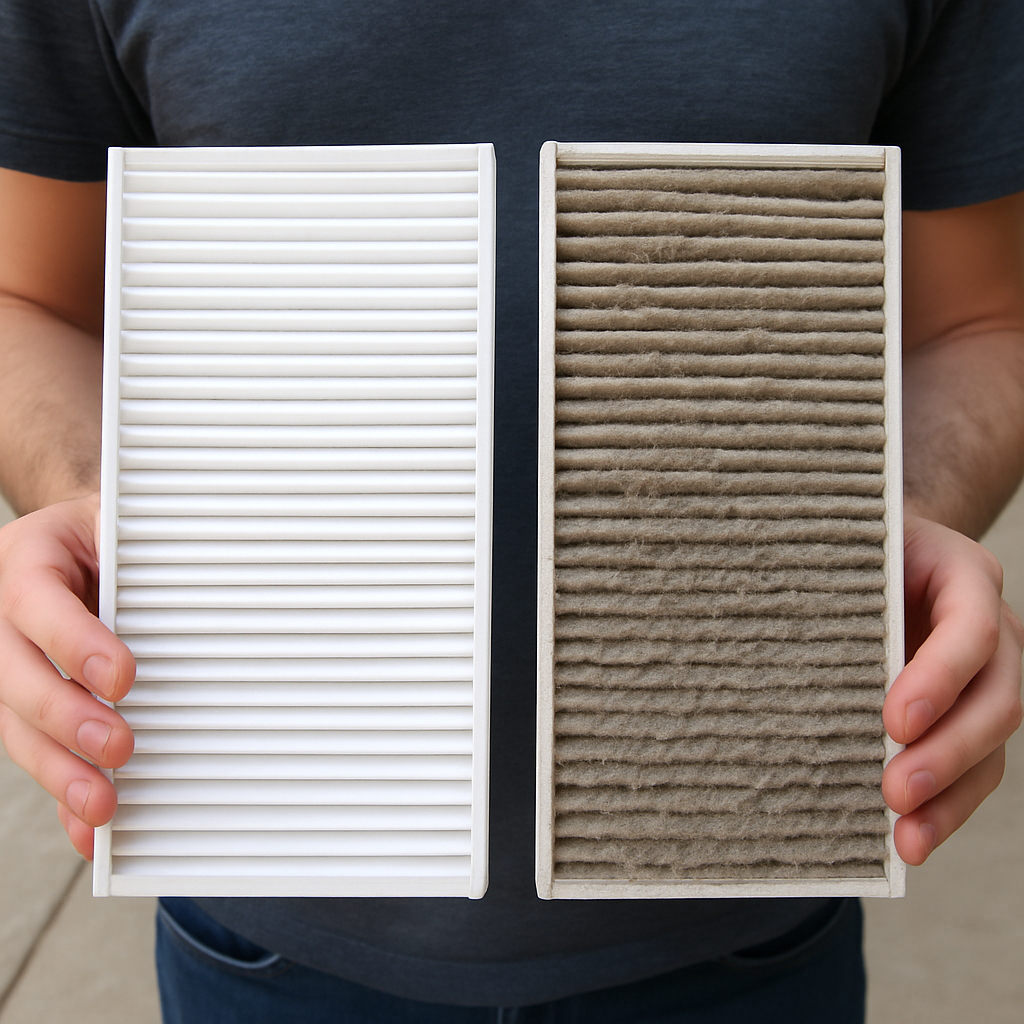
Inspect the Air Filter. A severely clogged air filter is one of the most common reasons an AC stops cooling. It chokes the system and restricts airflow, which can cause your system to work too hard, overheat, and shut down. Locate the filter in a slot near your indoor furnace unit and slide it out. If it’s gray and clogged with dust, replacing it might solve your problem instantly.
Why Is My AC Blowing Warm Air? A Troubleshooting Guide
If you’ve completed the simple checks and your vents are still pushing out lukewarm air, the problem often boils down to airflow or refrigerant. For a Santaquin home cooling system check-up, your next stop is the outside unit. This unit’s job is to release the heat it has pulled from your home. If it’s covered in cottonwood fluff, dust, or leaves, it can't breathe and will overheat. After turning off the power at the circuit breaker, you can gently hose it down to clear away debris.
When the outside unit is clean but your AC still isn’t cooling, the issue might be with the system’s refrigerant. Think of it like the coolant in your car; without enough of it, the engine can't stay cool. A refrigerant problem is not a DIY fix, as it requires specialized tools and training. If your system runs for a long time but the air never gets colder, this is a likely cause and a clear sign to call a professional.
A major warning sign that requires immediate action is ice. It sounds strange, but finding frost on the copper pipes or the outside unit indicates a serious problem. This can be caused by either poor airflow (like a clogged filter) or low refrigerant. If you see ice, turn your AC system off completely to prevent costly damage and schedule a service call.
What’s That Noise? Decoding Your Air Conditioner’s Cries for Help
A strange sound from your AC is unsettling, but its specific noise tells a story. If your outside unit hums or buzzes but the fan won’t spin, the culprit is often a bad capacitor. Think of it as a small starter battery that gives the fan motor its initial jolt. Because this part holds a powerful electrical charge even when the power is off, replacing it is a job for a trained professional.
Far more alarming is a loud, metallic grinding or clanking. When an air conditioner is making a loud noise like this, it often signals a failing compressor—the powerful engine at the heart of your system. A mechanical failure here is a critical issue that needs immediate attention from a technician.
If you hear any violent grinding or screeching, shut the system off immediately at your circuit breaker. This is the most important step you can take, as continuing to run the unit could turn a repairable issue into a costly full replacement. This situation calls for emergency air conditioner service Santaquin, as only a certified pro can safely diagnose the problem.
Is My AC Leaking Water or Freon? How to Tell and What to Do
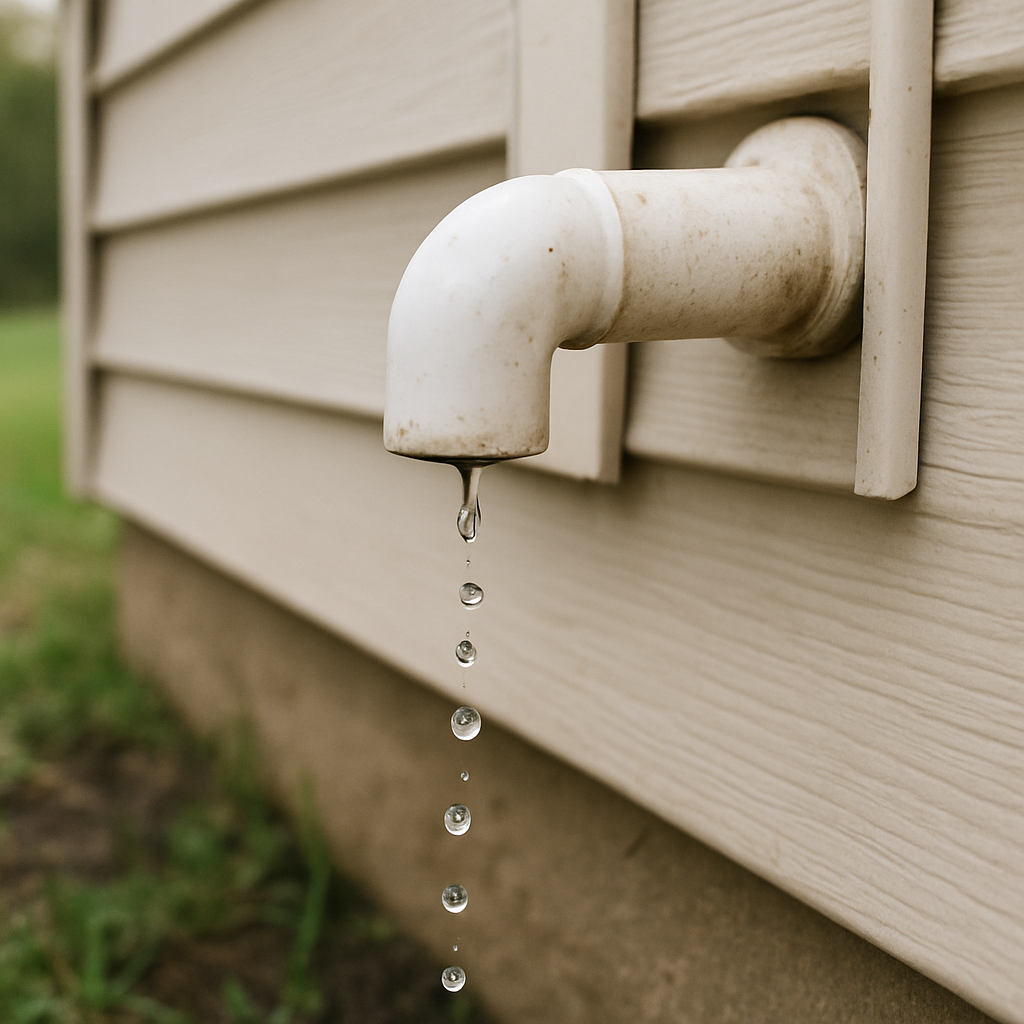
Finding a puddle near your indoor unit is one of the most common residential air conditioner problems. Your AC naturally pulls moisture from the air, channeling it outside through a small condensate drain line, like the one pictured here. If this line gets clogged with dust or grime, water backs up and spills onto your floor. While this can cause damage and trigger a shutdown, it's often a straightforward fix for a professional.
A refrigerant leak, on the other hand, is an invisible problem with very visible symptoms. Refrigerant (often known by the brand name Freon) is the essential cooling agent in your AC. You won't see a puddle of it, but you'll feel its absence. If your AC runs constantly but the air isn't cold, or you notice ice building up on the copper lines, you’re likely losing refrigerant. This leads many to look for a Freon recharge service Santaquin Utah.
However, just adding more refrigerant is like putting air in a leaky tire without patching the hole—it’s a temporary fix at best. A proper repair involves finding and sealing the source. Addressing the leak itself is crucial, which often leads homeowners to weigh the cost of repair against a full system replacement.
AC Repair vs. Replacement Cost: A Simple Formula for Santaquin Homeowners
Deciding whether to sink money into a major repair or invest in a new system is tough. To simplify the AC repair vs replacement cost debate, many pros use a quick guideline: multiply your unit's age in years by the estimated repair cost. If the total is more than $5,000, replacement is usually the smarter financial move. For example, a $900 repair on a 7-year-old unit ($900 x 7 = $6,300) suggests it’s time to start looking at new systems.
Beyond simple math, the type of refrigerant is a huge factor. Units older than 10 years often use R-22, a refrigerant that is no longer produced. This makes solving a leak incredibly expensive, as the remaining supply is scarce. Answering "how much does it cost to fix an AC leak" on an R-22 system often reveals that the refrigerant cost alone makes replacement the logical choice.
A new unit also comes with a significant long-term benefit: lower energy bills. An AC’s SEER rating is like its “miles-per-gallon.” A modern, high-SEER unit is dramatically more efficient than a decade-old system, meaning the upfront cost is offset by real savings on your Santaquin power bill every summer.
Finding the Best HVAC Technicians in Santaquin: 4 Questions to Ask Before You Hire
Choosing from the list of local HVAC companies near Santaquin UT can feel like a shot in the dark, but arming yourself with a few key questions ensures the person you hire is qualified, transparent, and trustworthy. To find the best HVAC technicians in Santaquin, ask these four questions before committing to any work:
Are you licensed and insured for work in Utah?
Are your technicians NATE-certified? (This is a master certification for HVAC pros, proving their expertise.)
Can I get a detailed, written estimate before work begins?
Do you have recent reviews or references from other Santaquin homeowners?
Getting clear “yes” answers is your first line of defense against poor workmanship and surprise charges. A written estimate is non-negotiable, even for a same-day AC diagnostic Santaquin service call, as it locks in the scope of work and protects your budget. A reputable company will be proud to confirm its credentials, giving you peace of mind.
Your Action Plan for a Cool and Comfortable Santaquin Summer
That moment of panic when the cool air stops can now be replaced with a clear plan. You can confidently check the thermostat and filter, recognize serious warning signs like ice or grinding noises, and know exactly when a professional is needed. This knowledge makes you an informed homeowner, ready to take the right first steps.
To prevent this frustration next year, use these central air conditioning maintenance tips. First, set a calendar reminder to change your air filter every three months. Second, in the spring, gently hose down your outside unit to clear away winter debris. These two actions dramatically improve your system's health and efficiency.
Should you ever need professional AC Repair in Santaquin, Utah, you can make the call not with panic, but with confidence. You know what to look for and what to ask, ensuring your family gets back to being cool and comfortable without the stress of the unknown.